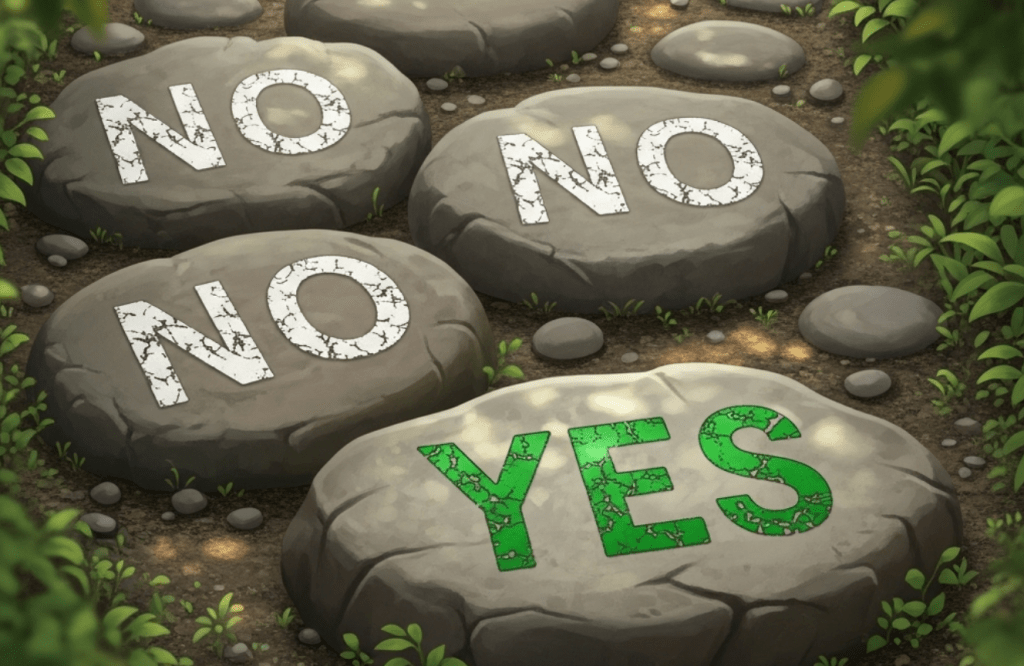
I still remember the day I first pitched my idea. I saw a critical problem that needed solving, one I was deeply passionate about. But when I brought it to our VPs, I heard the same answer twice: “No.” They had their reasons, valid ones about resources and priorities, but I couldn’t let it go. I knew in my gut this product could make a real difference.
This experience taught me a valuable lesson: some of your most impactful work might come from the projects that initially hear “no.” The difference lies in how you handle that rejection and transform it into opportunity.
Not Every “No” is an Invitation
First, a critical caveat: not every “no” is worth fighting over. In a corporate or professional setting, hierarchy and priorities exist for a reason. Sometimes, the most effective thing you can do is accept the decision and move forward. The key is to choose your battles wisely.
So, how do you know when a “no” is worth fighting for? It’s when you strongly feel that the idea isn’t just a good one, but a vital one. It’s when you believe the potential impact outweighs the effort and risk. If you feel this strongly, then it’s time to be strategic. It’s time to dig deeper, to listen carefully, and to suggest a new path, a pivot that addresses the hidden assumptions and concerns behind the initial rejection.
If you’ve decided the idea is worth the fight, here’s how to approach it.
The Recipe for Turning a “No” into a “Yes”
1. Understand the “No”
Instead of getting discouraged, get curious. A “no” is rarely a personal rejection; it’s usually a signal that something about your proposal isn’t aligned with the decision-maker’s priorities or concerns.
I met with both VPs to truly understand their objections. One VP was worried about ROI (Return on Investment) and resource allocation. The other had concerns about risks and implementation challenges. Getting specific and curious about their reasoning was the first step toward finding a path forward.
2. Address Concerns with Concrete Plans
For each objection, I didn’t just argue my point; I developed specific, actionable solutions. An objection is a problem statement, and your job is to provide the solution.
- For ROI concerns: I created a detailed plan to cap the initial investment and outlined clear, measurable success metrics.
- For risk concerns: I developed comprehensive risk mitigation strategies and brought in key stakeholders early to get their buy-in and input.
3. Start Small, Prove Value
Sometimes, the biggest hurdle is getting someone to commit to a large, unproven idea. My solution was to propose a minimal approach, what we now call a “side project.” This allowed us to validate the concept without disrupting our core business. It was a low-risk way to demonstrate value and prove the concept’s potential.
The Breakthrough
What started as a “side project” eventually proved its worth. The product not only launched successfully but also saved lives. Today, it has “graduated” into a full-fledged team dedicated solely to its success.
The most rewarding part? The same VPs who initially said “no” became our biggest champions. Far from being penalized for my persistence, I was recognized for it. The key wasn’t in ignoring the “nos”, it was in understanding them and systematically addressing each concern until “no” became “yes.”
Now, I’m curious: What “nos” are you facing today that could transform into tomorrow’s success stories? Take a moment to reflect. Which rejection might be worth a second look, armed with curiosity and a concrete plan?
 Mor Schlesinger
Leave a comment